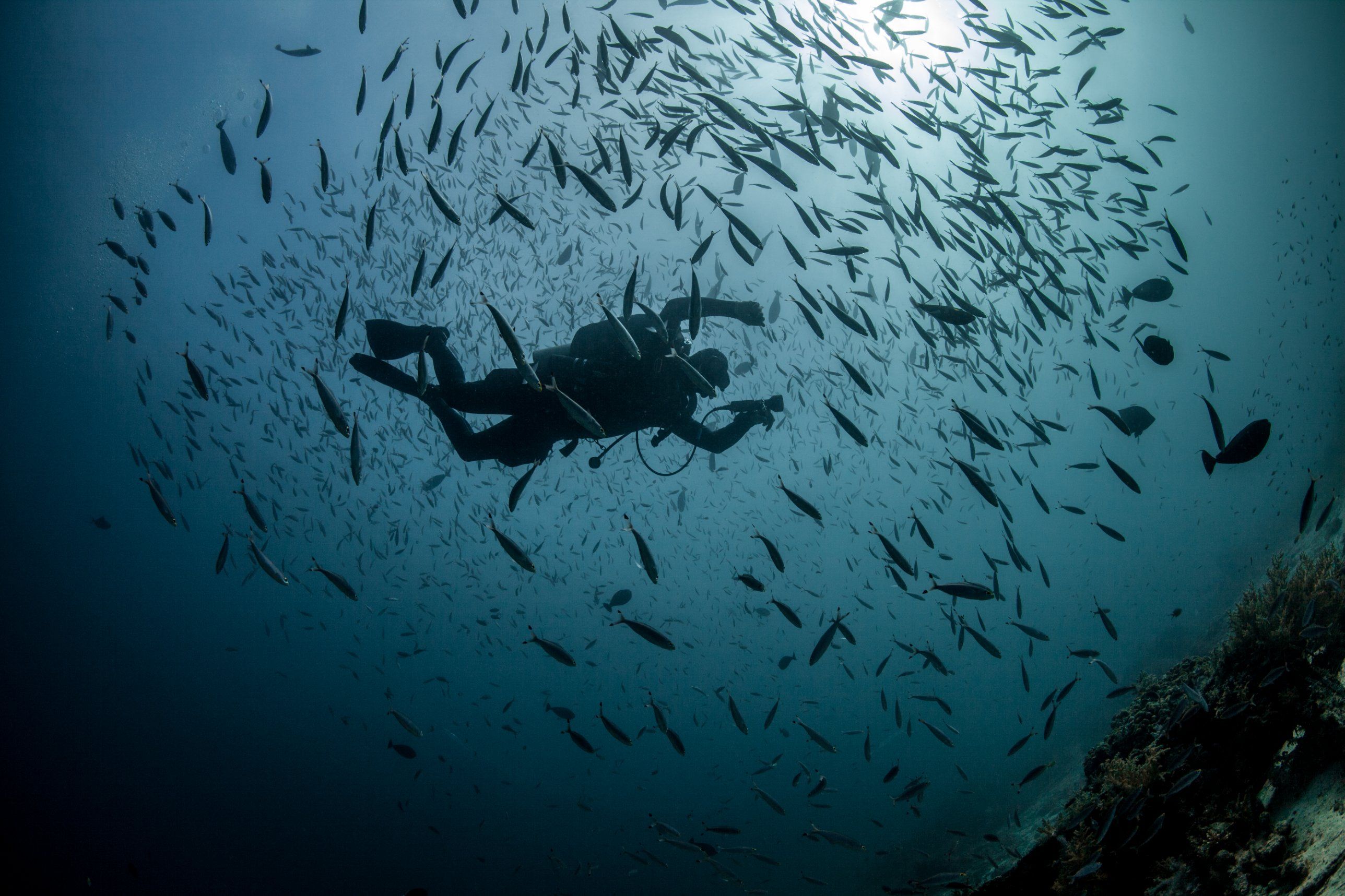
What you meet in the water
Grouper on the walls, octopus and small moray through the boulder fields, cuttlefish and seabream over the sand, and barracuda hanging out in the blue off the points. Amberjack and tuna come through on the deeper offshore sites. Seahorses are reported at Coral Cave and Ħekka Point.
The north coast drops into open water quickly, which is why the occasional large pelagic animal turns up at all. In August 2014 a diver filmed an ocean sunfish, Mola mola, off Wied il-Mielaħ and described it as a once in a lifetime experience. That is the right way to hold it: an event, not a season. Nobody should book a week expecting one.
The shallow sandy bays sit on Posidonia oceanica, Neptune grass. It is protected seagrass, it grows a few centimetres a year, and the etiquette is to fin above it rather than through it.
Why Gozo and not Malta
Most Mediterranean diving is done from a boat. Gozo’s distinction is that a large share of its best sites are reachable from the shore, which changes the economics of a diving holiday completely: no boat fee, no schedule, and you can dive twice in a morning because the entry is a short walk from where you parked.
That is the reason dive centres cluster here out of proportion to the island’s size, and the reason a meaningful part of the local economy runs on it.
The sites people come for
Dwejra is the best known. The Blue Hole is a natural shaft through the rock that opens into the sea at around fifteen metres, with an arch at the bottom leading out to the wall. The Azure Window stood alongside it until it collapsed in March 2017, and the rubble field it left is now a site in its own right. Entry is over rock with a chain to help, and it is serious in any swell.
Reqqa Point, the northernmost tip of the island, is a vertical wall dropping past fifty metres with caves cut along it. Visibility here is usually the best on the island.
Xatt l-Aħmar on the south coast is the wreck site. Two vessels, the MV Karwela and the MV Cominoland, were scuttled within recreational depth and sit upright on sand. Shore entry is straightforward, which is unusual for wrecks.
Ras il-Ħobż, further west along the same coast, has a pinnacle rising from about fifty metres to within a few metres of the surface. Divers call it the Middle Finger.
Mġarr ix-Xini is the sheltered option. The inlet walls are good for training dives and for anyone’s first dive of a trip.
The water through the year
Diving runs all year. The sea sits around 15°C in February and March and reaches the mid twenties by August and September, which is when visibility is also at its best. September and October are the months most experienced divers pick: warm water, fewer people, and the summer haze gone.
Winter diving is genuinely good when the weather allows, but the north coast closes out in a tramuntana and Dwejra closes in a westerly, so plan around the wind rather than the calendar.
What to check before booking
Whether the centre dives from shore or boat, and which sites are included. Whether they will take you to Dwejra at all, since some will not in any swell. And whether your certification covers the depth at Ras il-Ħobż and the wrecks, which sit deeper than they look.
Elsewhere on the island
- Fishing & farming Fishing in Gozo: the boats, the seasons and the fish Mġarr is the island's working harbour, not a picture of one. What the fleet catches, when each fish is in, and how to order so you are eating what came off a Gozo boat.
- Eat & drink Ġbejniet: the Gozo cheeselet What ġbejniet actually are, the four ways you will meet them, and why Gozo makes them better than Malta does.
- Eat & drink The Gozitan ftira, and why it is not a pizza Malta's ftira is on the UNESCO heritage list. Gozo's version is a different thing again, and worth seeking out properly.